.png)

What Content Warnings Matter for Clean Romance
I care about content warnings because I don’t enjoy getting blindsided. Simple. I can handle a lot. I just want to choose it on purpose. And if you’re a clean romance reader, you probably get that deep in your bones.
Clean doesn’t always mean the same thing to everyone. One person’s “sweet” is another person’s “why is this in here.” So content warnings aren’t about being fragile. They’re about control. About keeping your reading life peaceful.
Clean romance is not one setting
Look, I used to think “clean” was basically a checkbox. No explicit sex. Minimal language. Done. Turns out I was being naïve. Clean romance can still deal with heavier topics as long as the page stays closed-door. It will depend on you whether you want sweet and romantic or romance with heavier topics. Same reader. Different week.
Two books can be clean and still hit totally different
One can be all cupcakes and small-town festivals. The other can be clean but wrapped around grief, addiction in a side character, or a traumatic backstory. Both may technically fit “clean.” Your nervous system might disagree.
That’s why I like having a place to sanity-check the bigger landscape. I keep a bookmark to this clean romance books, movies, and TV guide because sometimes I’m choosing a comfort read. Sometimes I’m choosing something with more teeth.
Content warnings are a kindness, not a scold
I hate when people act like content warnings are censorship. They’re not. They’re labels. Like “contains nuts.” Nobody’s mad the cookie exists. I just want to know what I’m biting into.

The content warnings that actually matter to clean romance readers
Thing is, the warnings that matter most in clean romance aren’t always the obvious ones. Yes, spice level matters. But some of the biggest deal-breakers are emotional landmines. The stuff you don’t see coming.
Sexual content, even when it is off page
Closed-door scenes can still include detailed arousal talk, heavy make-out descriptions, or extended “almost” scenes. For some readers, that’s fine. For others, it breaks the promise of clean.
And then there’s sexual trauma in the backstory. Sometimes it’s handled gently. Sometimes it’s dropped in like a plot coupon. I’m not a fan of that surprise. I want the warning upfront.
Cheating, emotional affairs, and the messy gray areas
This one splits clean romance readers fast. Some people only mean “no explicit scenes.” Others mean “no infidelity, no exceptions.”
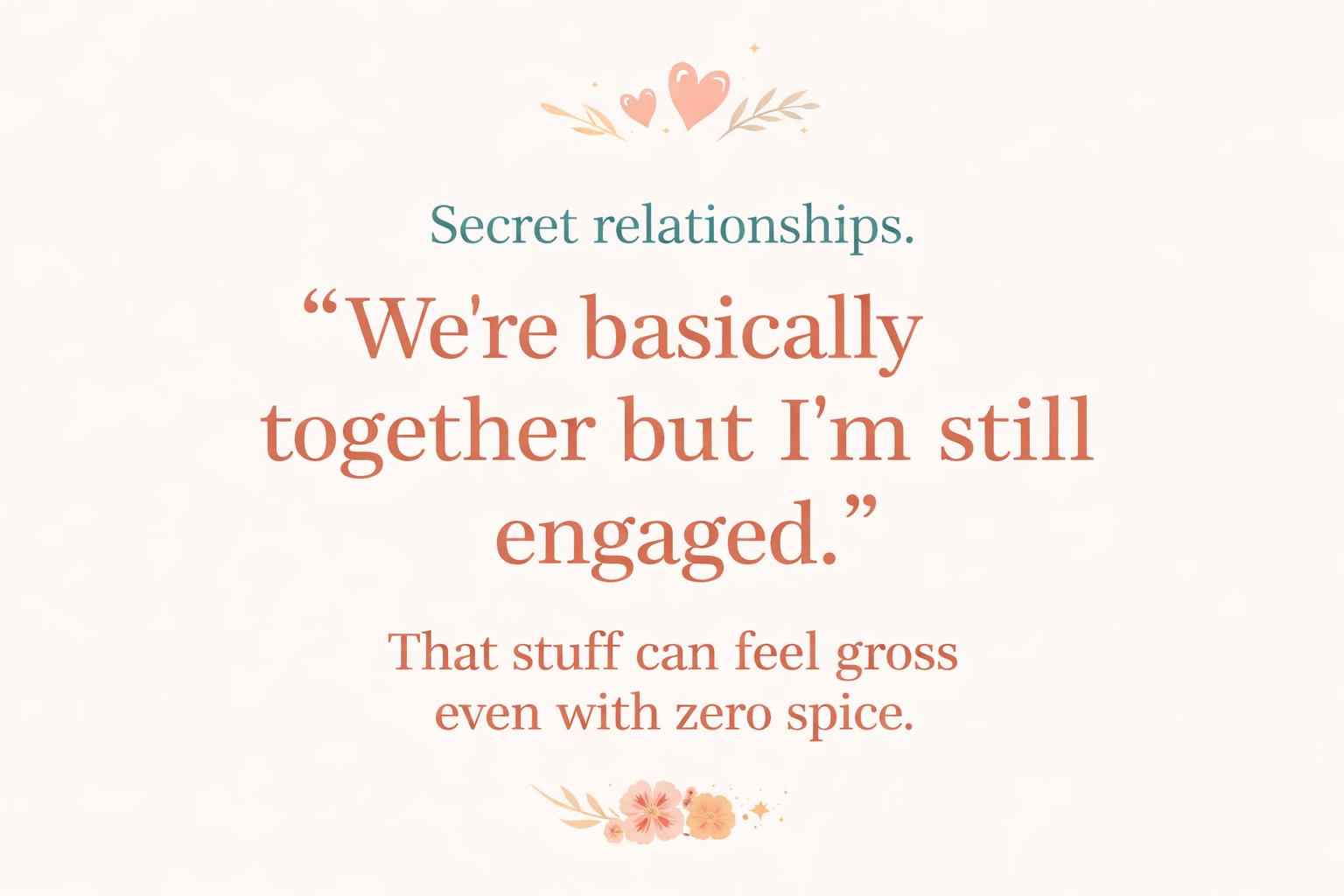
Here’s what I’ve noticed in my experience. It’s not just cheating. It’s the vibe of betrayal. Secret relationships. “We’re basically together, but I’m still engaged.” That stuff can feel gross even with zero spice.
- On-page cheating or kissing outside the relationship
- Emotional affair framed as romantic destiny
- Love triangles that lean on manipulation
- Third-act breakup caused by dishonesty
- Ex-drama that turns stalker-ish
Short list. But it’s the stuff that gets people upset in reviews. Every time.
Stuff that sneaks past ratings systems
Honestly? Ratings are a blunt tool. A movie can be squeaky clean sexually and still be brutal emotionally. Or it can be “family” and still have a scene that makes you want to crawl out of your skin.
Violence and menace in cozy packaging
Clean romance mysteries are a big example. I enjoy them. But some are light, and some have serial-killer energy. Even when the romance stays sweet, the suspense can get intense.
And menace can show up in non-mystery romance too. Abusive exes. Threats. Kidnapping plots. Stalking played for tension. That’s not automatically “unclean.” But it’s not automatically relaxing either.
Grief, pregnancy loss, and medical trauma
This is the category that most often catches clean romance readers off guard. Because it’s not “content” in the spicy sense. It’s life stuff. And it’s heavy.
Pregnancy loss. Infertility. Cancer. Dementia. A parent dying on-page. These aren’t moral issues. They’re emotional ones. If you’re reading clean romance for comfort, those topics can feel like someone yanked the rug out.
When I’m in a tender season, I’m picky. Not ashamed. Just picky.
What I check before I recommend a clean romance
So, how do I do this in real life? I don’t rely on one source. I triangulate. That sounds fancy. It’s not. It’s just me being cautious because I hate regretting a pick halfway through.
My quick and slightly messy process
When I’m picking a book or a movie, the first thing I check is how reviewers talk around the hard stuff. People rarely spoil outright. But they’ll hint. “Bring tissues.” “Heavier than I expected.” “Not as light as the cover.” That language matters.
Then I look for specific red-flag phrases. “Love triangle.” “Dark twist.” “Gritty.” Sometimes those are a yes for me. Sometimes it’s a hard no. And I also look at who wrote the review. A reviewer who normally reads high-spice romance saying “this was clean” is useful. A reviewer who only reads squeaky-clean inspirational romance saying “this was clean” is also useful. They mean different things. Context.
Why I like category-level rating notes
One-off reviews can miss things. Or they focus on the wrong things. I like having a whole stash of ratings and warnings by theme, so I can match the warning to what actually bothers me.
That’s why I point people to this clean romance content warnings and ratings collection when they’re trying to avoid specific topics. It’s less about judging books and more about filtering your options so your reading time feels safe.
How to ask for content warnings without feeling awkward
But what if you’re asking a friend? Or you’re in a book group? This is where people get weirdly self-conscious. Don’t. You’re allowed to have boundaries. You’re also allowed to have shifting boundaries.
Use simple, non-defensive language
I keep it boring. “Hey, does it include cheating?” “Is there pregnancy loss?” “Is it more cozy or more intense?” That’s it. No speeches. No apologies.
And if someone pushes back with “just read it,” I take that as a sign they’re not my warning person. Not a moral failing. Just not compatible.
Know your top three deal-breakers
This helps so much. You don’t need a 40-item list. Pick the big ones that reliably ruin your good time. For a lot of clean romance readers, it’s some mix of cheating, explicit sexual content, and graphic violence. For me, it's explicit sexual content, excessive foul language (I can handle a hell or a damn once in a while. Sometimes a character needs to say it to get a point across or an emotion out. Otherwise, I WNF a book with f***, J**** C*****, G******, etc.), and graphic violence. I don't write these things in my books, and I certainly don't want to read them. But sometimes they get me when I’m not looking.
And yes, you might change your list later. Life does that.
FAQs for What content warnings matter for clean romance
Is a book still clean if it includes assault or abuse in backstory?
Usually, people still label it clean if the romance stays closed-door, and the language stays mild. But “clean” and “comfortable” aren’t the same thing. I treat trauma content as its own warning category. If it’s on-page or described in detail, I want a clear heads-up. If it’s referenced briefly and handled with care, I might be fine. Depends on the day.
Are content warnings spoilers?
Sometimes a little. But I’ll be straight with you. I’d rather lose a tiny twist than lose my peace. You can phrase most good warnings without giving away the ending. “Includes pregnancy loss” isn’t the same as “this character dies in chapter 27.” A warning is a label. Not a plot summary.