
When Should Clean Romance Readers Skip a Title
Skip the title when you already know it’s going to mess with your peace. That’s the whole thing. Not every book needs a chance. Not every “it wasn’t that bad” recommendation is worth your time.
I’ve been reading clean romance long enough to learn this the hard way. I used to force myself through stuff because I felt silly skipping. Like I was being “too sensitive.” Nope. I was being tired. Big difference.
And yes, this applies to books, movies, and TV too. I keep a running mental list of what I’m willing to sit with, and what I’m not. If you want a bigger map of how I think about clean across formats, I point people to my clean romance books, movies, and TV shows guide. It’s where I park the definitions that get fuzzy fast.
When the vibe feels off before you even start
Look, sometimes you can tell from the cover copy. Or the first page. Or even the way the author talks about the story online. It’s a tone thing. A “this is going to be stressful” thing.
I’m not talking about normal conflict. I’m talking about dread. That tight, bracing feeling. The kind that makes you put the book down to go fold laundry. And you don’t even like folding laundry.
My personal early warning signs
Here’s what usually tips me off:
- Everyone is snarky. All the time. Like kindness, it is embarrassing.
- The banter reads mean, not playful.
- The setup relies on humiliation for laughs.
- “Edgy” marketing language that’s clearly trying to signal heat without saying it.
- A vibe of “rules don’t apply to me” from the love interest.
And yes, any of those can show up in a clean book. Clean doesn’t always mean gentle. Sometimes it just means the bedroom door stays shut while everything else is chaos.
Snark is not chemistry
I used to confuse sass with spark. Back when I started reading romance seriously, I’d push through chapters of constant quipping, thinking it would soften into tenderness.
Sometimes it does. Often it doesn’t. If I’m 20% in and I don’t like being inside the characters’ heads, I’m out. Life’s too short to spend it with people I wouldn’t sit next to at a church potluck. Or at a coffee shop. Or anywhere, honestly.

When content warnings hit your known deal-breakers
Thing is, clean romance readers aren’t all avoiding the same stuff. One reader can handle a heavy grief arc but can’t do cheating. Another is fine with suspense but can’t do on-page violence.
My rule is if a warning matches a personal landmine, I don’t bargain with it. I don’t tell myself I’ll “just skim.” I don’t pretend it won’t be a big part of the plot. I skip. And I feel zero guilt about it.
Know your non-negotiables
You’ll save yourself so much time if you name your deal-breakers in plain language. Not fancy. Just honest.
For me, a few things are instant no’s most of the time. Cheating as a romantic obstacle. Explicit sexual content (obviously). And excessive foul language. That one bugs me.
If you want a wider menu of what people flag and how rating language usually works, I keep that stuff over on my clean romance content warnings and ratings page. Because half the battle is translating vague reviews into actual information, you can use.
When reviews feel like they’re talking around something
Have you ever noticed how some reviews get weirdly coy? Like, “It was a little more intense than I expected.” Or “Not what I’d call clean, but still sweet.”
That’s not clarity. That’s a warning label wearing a cute hat.
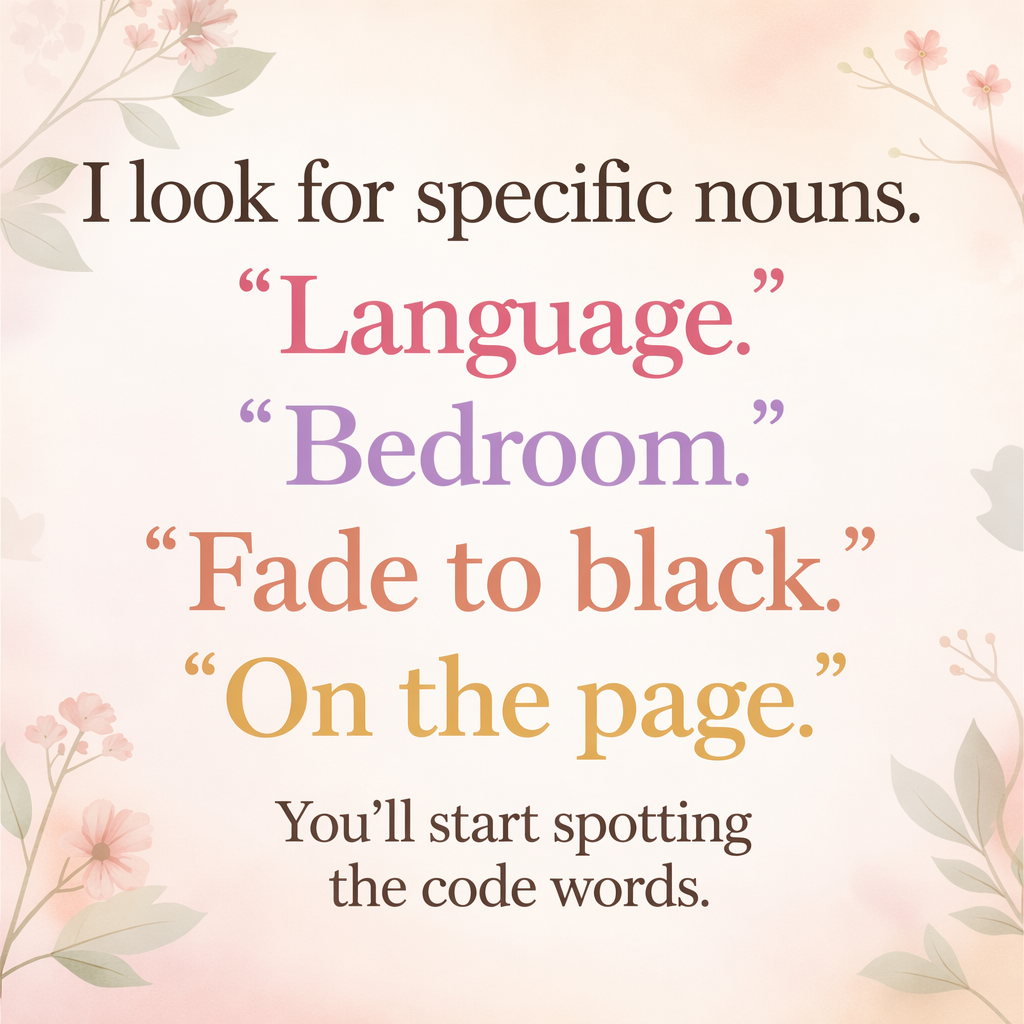
When I see that pattern, I go hunting. I scan a few more reviews. I look for specific nouns. “Language.” “Bedroom.” “Fade to black.” “On the page.” You’ll start spotting the code words. It’s like learning a dialect.
When the romance is clean, but the emotional tone is grim
Honestly? Some books are “clean” in the technical sense and still leave me feeling wrung out. No spice. No swearing. And yet I finish the last chapter feeling like I just watched someone kick a puppy in slow motion.
That’s a skip for me when I’m reading for comfort. Which is most nights.
Trauma-focused plots can be real, and still not for you
I’m not anti-heavy stories. I’ve read some gorgeous, hope-filled romances that deal with grief, abuse recovery, addiction in the family, all of it. I've written those kinds of stories. But I choose to read those on purpose. I don’t stumble into them on a random Tuesday.
If the book’s engine is trauma, you deserve to know that going in. And if you know you can’t carry that right now, skip it. You’re not failing at being a “serious reader.” You’re being kind to your nervous system.
Watch out for the fake “uplift” label
This is one that gets me. A description will promise “heartwarming” and “uplifting,” and then you’re 40 pages deep in nonstop emotional battering. Sometimes it’s done well. Sometimes it’s just tonal whiplash.In my experience, “uplifting” gets slapped on books that end happily but get there by dragging you through a swamp. If you’re not in the mood for swamp. Don’t go.
When clean standards are fuzzy, and you’ll spend the entire book on edge
So, here’s the annoying truth. Some authors write clean with very soft boundaries. Lots of heated making out. Long, detailed scenes that stop right before the line. Sometimes a surprise open-door scene. Or language that’s technically not explicit but feels like it’s trying to be.
If that’s fine with you, cool. Plenty of readers want that. But if you know you’ll be tense the whole time, waiting for the moment it crosses your line, that’s not a relaxing read. That’s you guarding the page.
“Closed door” doesn’t always mean what you think
I used to assume “closed door” meant no steam, period. Turns out people use it in different ways. Some mean “no explicit sex.” For some, it signifies "no actual sex, but plenty of suggestive interactions written out." Some mean, “They kiss and then we cut away.”
That mismatch is how readers get burned.
When I’m unsure, I look for specifics in reviews. How far do the scenes go? Are body parts described? Are there repeated “almost” moments? Does the author write attraction in a way that feels reverent, or in a way that feels like it’s trying to sneak something past you?
If you’re reading to protect your thought life
I’m going to say this gently because it’s personal. A lot of clean romance readers aren’t just avoiding explicit content. They’re trying to keep their minds calm. Or keep their imagination from running wild. Or stay aligned with faith commitments. I get it.
If that’s you, then “almost explicit” can be worse than obvious spice. At least with obvious spice, you can spot it and skip. The blurry stuff creeps.
So if a title seems blurry. And you know blurry makes you anxious. Skip. No drama. Pick something that feels safe in your bones.
When you’re only reading it because you feel pressured
Now, the sneakiest reason to skip. Social pressure. Book club pressure. Friend pressure. “Everybody loves it” pressure.
I’ve been there. Someone hands you a book as if it’s a gift and a test at the same time. You don’t want to be the picky one. You don’t want to sound judgmental. I've done this once or twice in the past because I wondered what all the hype was about. I finished the book after chapter one. Never again.
But you also don’t want to sit through content you don’t want in your head. That matters more than being agreeable.
How I bow out without a big speech
I keep my exit lines simple. I don’t over-explain. Over-explaining invites negotiation.
Stuff I actually say:
“I’m not in the mood for that tone.”
“I’m keeping my reading lighter right now.”
“That one’s not for me, but I’m glad you loved it.”
And if someone pushes? That tells me something about them, not about me.
The book hangover is real
Clean romance readers talk about this a lot. You finish a book and it lingers in the worst way. You feel unsettled. Unwanted scenes replay in your mind. You’re irritable with your family for no good reason.
I’ve learned to treat that as data. If a particular author or trope keeps giving me that hangover, I stop “trying again.” I don’t need three strikes. One is usually enough.
FAQs for When should clean romance readers skip a title
What if I skip a title and later feel like I judged it unfairly?
I’ve felt that. Especially when a book is popular, and people talk about it as if it changed their lives. But skipping isn’t a moral verdict. It’s scheduling. It’s self-knowledge.
If you’re curious later, you can always come back with better context. Or read a detailed review from someone whose clean boundaries match yours. I do that all the time. I just don’t force it when I’m tired.
How can I tell the difference between normal conflict and something that’ll feel too heavy?
For me, it’s the ratio. How much tenderness do I get compared to stress? Do the characters have safe people? Is the tone hopeful even when bad things happen?
Also, pay attention to your body. Sounds dramatic. It isn’t. If you keep clenching your jaw while reading, that’s your answer. Conflict can be fun. Tightness usually isn’t.