.png)

How to Choose Friends to Lovers Clean Romance
I’m picky about friends-to-lovers. Not because I’m hard to please (okay, maybe a little). But because this trope can feel either deliciously cozy. Or weirdly… manipulative. And if you’re a clean romance reader, you know that tone matters. A lot.
So here’s how I choose clean friends-to-lovers stories that actually work. The kind that gives you the slow-burn butterflies without the gross-out factor. Or the “Wait, were they emotionally cheating for 200 pages?” feeling. Nope.
Start with the friendship, not the crush
Look, the best friends-to-lovers starts as friends. Not “friends” who are clearly one flirting session away from making out behind the church potluck table.
Real friendship has history and friction
In my experience, clean romance authors who do this well give you shared routines. Inside jokes. A little annoyance, even. The kind you only have with someone who’s been in your life long enough to know how you take your coffee and how you get when you’re stressed.
I used to think the easiest win was instant chemistry. Turns out that’s not what I’m chasing in this trope. I want recognition. That moment when one of them realizes, “Oh. It’s you.”
Watch for performative niceness
This bugs me. When a character is “nice” in a way that feels like they’re keeping score. Clean romance readers pick up on that fast, because a lot of us are reading for sincerity. Not a romance built on emotional pressure.
So I ask myself: would they still be friends if romance never happened? If the answer’s no, I usually move on.

Make sure the clean vibe matches your comfort zone
“Clean” isn’t one single thing. You already know that. Some books are closed-door sweet. Some are faith-forward. Some are just low-heat with more kissing than you’d want. No judgment. But you’ve got to match your own zone
Check for cues early
I do this almost automatically now. The first chapter cues tell you a lot. Language. How attraction is described. Whether the story lingers on physical detail or keeps it more emotional. And how the characters talk about boundaries.
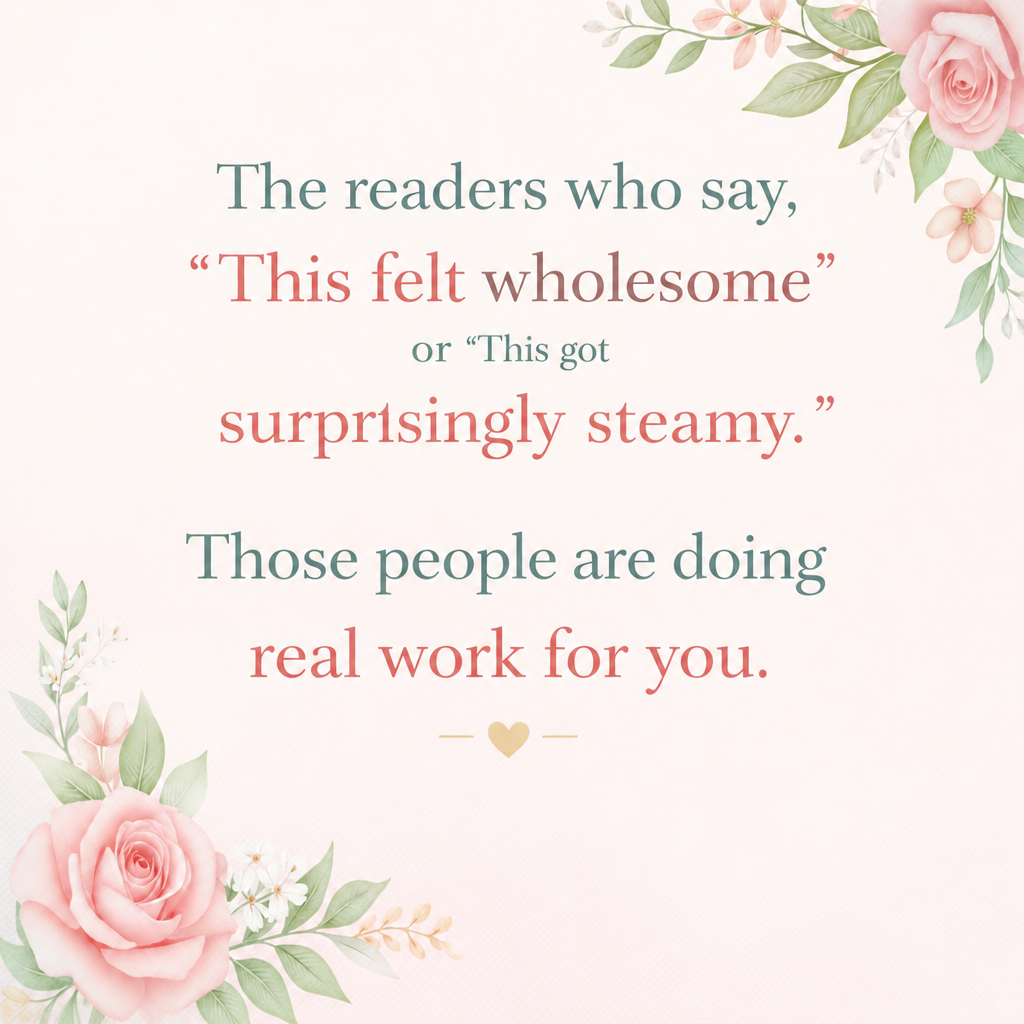
And yes, I’ll peek at reviews. Not the dramatic one-star rants. The calm ones. The readers who say, “This felt wholesome” or “This got surprisingly steamy.” Those people are doing real work for you.
Know your own deal- breakers
Real talk: I keep a mental list. It’s not fancy. But it saves me from that sinking feeling when a “sweet” book swerves into stuff I didn’t sign up for.
- Love triangles that feel like an emotional mess
- Friends who act possessive before they ever talk
- Excessive longing described in super-physical detail
- Secret pining that turns into resentment
- Boundary-pushing played as romantic
If you’re in a mood where you want zero angst and maximum comfort, I’d also browse more options inside this clean romance tropes and themes collection. It helps when you want a specific vibe.
Look for slow burn that feels earned, not stalled
Slow burn is the whole point here. But some books confuse slow burn with “nothing happens.” Two different things.
The best slow burn has movement
What actually works is incremental change. The friendship deepens. They choose each other in small ways. They notice new things. They show up. Again. And again.
I love when the romantic shift comes from competence or character, not just “I saw you in a dress.” Give me the scene where he watches her handle a difficult family situation with grace. Or she sees him quietly step in to help someone who can’t help him back. That’s the stuff.
Pay attention to why they didn’t date sooner
Here’s the thing. Friends-to-lovers needs a believable reason they stayed friends. Timing. Fear of losing the friendship. One of them not feeling ready. A past heartbreak. Even a practical obstacle like distance.
But if the reason is basically “they’re both oblivious,” I get impatient. A little oblivious is cute. Two hundred pages of it? I’m out.
Avoid the sneaky emotional affair vibe
This is where clean romance readers can feel extra cautious. Because we care about emotional integrity. Not just physical boundaries.
Friends-to-lovers works best when everyone’s situation is clean
If one of them is in a serious relationship, I need the story to treat that with respect. Not as a silly obstacle. Not as, “Well, they’re not married, so it’s fine.” That kind of logic feels slippery.
In my experience, the safest friends-to-lovers setup is when both characters are truly available. Or when a relationship ends clearly before the romance really kicks in. Clean lines. Fewer stomach knots.
Transparency beats secret pining
And I’ll say it. I’m not a fan of secret pining that turns the friendship into a performance. The “best friend” who’s actually auditioning for spouse and getting bitter when it doesn’t pay off? That’s not romance to me. That’s insecurity in a trench coat.
I’d rather read a story where the pining character does something hard. They step back. Or they confess without pressure. Or they accept a no with maturity. That’s attractive. That’s clean in spirit, not just in content.
Use a few quick filters for books, movies, and TV
Sometimes you want a book. Sometimes you want a Friday night movie. Same trope. Different pitfalls.
For books, sample the voice
I recommend reading the first 10 pages before you commit. Friends-to-lovers' lives and dies on voice. If the banter feels mean. If the inner monologue feels too thirsty. If the tone is cynical. You’ll feel it fast.
And if you want a bigger set of clean-friendly suggestions across formats, I keep sending readers to my clean romance books, movies, and TV guide. When you’re tired and just want something safe, it’s handy.
For movies and TV, watch the rating and the vibe
Ratings help, sure. But the vibe is the real tell. Some PG-13 romances still feel emotionally messy. Some older PG movies feel sweeter than you’d expect. So I look at genre cues too. Is it a raunchy comedy wearing a romance costume? Hard pass.
One more thing. Episodic TV can drag out the will-they-won’t-they until it turns into flirting-with-everyone chaos. That doesn’t always land well for clean romance readers. I pick shows where the writers respect commitment and don’t treat jealousy like foreplay.
FAQs for How to choose clean romance friends to lovers
How do I tell if a friends-to-lovers story is actually clean before I read it?
I scan three things: the “heat level” language in reviews, the categories the book is in, and a quick sample of the first chapter. In my experience, the first chapter reveals whether the author handles the attraction with tenderness or with heavy physical detail. Overall, the reviews are the biggest factor for me, depending on the language used.
What’s the biggest red flag in friends-to-lovers for clean romance readers?
For me, it’s when the friendship is built on hidden expectations. One person is “being a friend” but really trying to earn romance. Then they get resentful. That dynamic tends to blur emotional boundaries and make the eventual relationship feel less like a choice and more like a reward.