.png)

What is slow burn in clean romance stories?
Slow burn in clean romance is when the relationship takes its sweet time. Not because the author’s stalling. Because the characters are. They’re choosing restraint. They’re learning to trust. And the story makes you feel every tiny step.
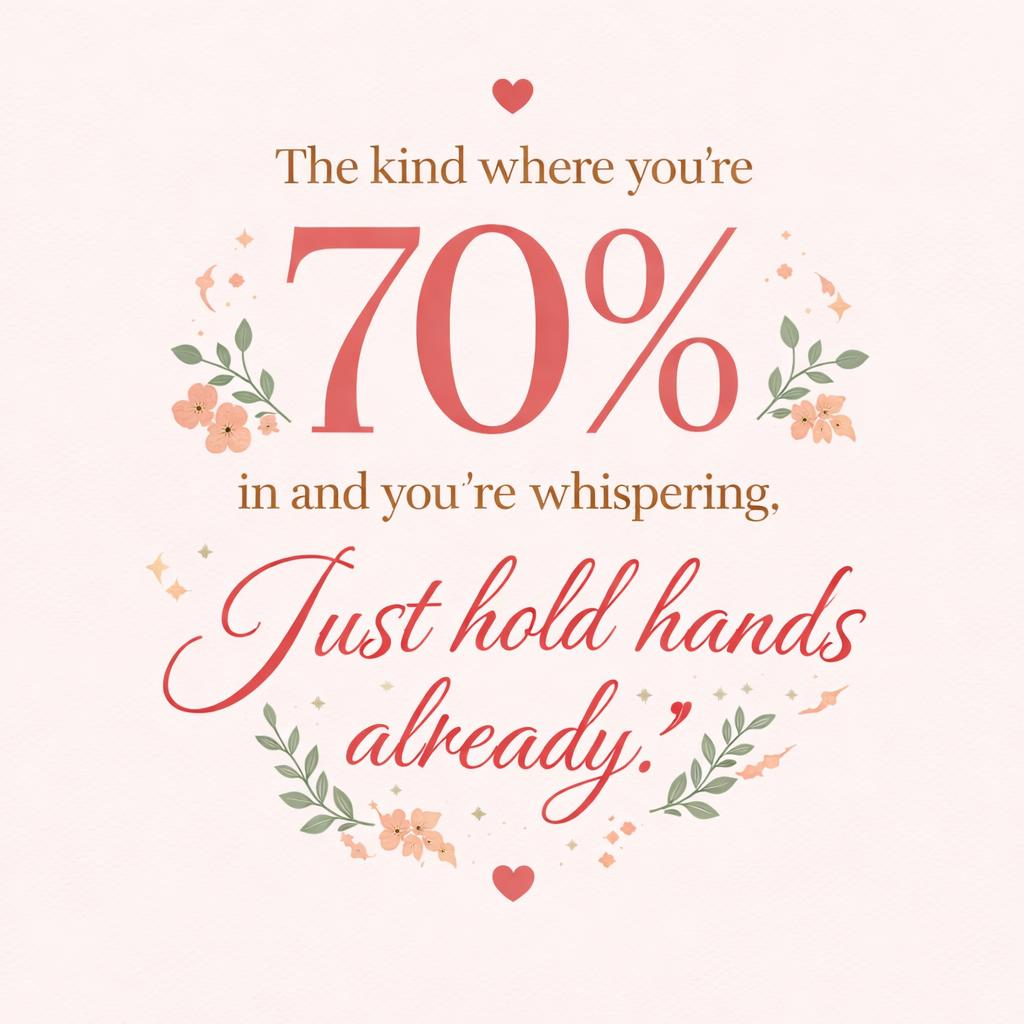
And yes, it can be addictive. The kind where you’re 70% in and you’re whispering, “Just hold hands already.”
What slow burn actually feels like in clean romance
Here’s what I mean. Slow burn isn’t “nothing happens.” Stuff happens. It’s just not physical stuff. Or not yet.
In my experience, clean romance readers tend to want emotional intimacy that’s earned. Not instant. Not forced. Slow burn delivers that in a very particular way. You get proximity. You get meaningful conversations. You get those tiny moments that make your chest tighten. A shared joke. A look that lasts one second too long. A hand offered. Then pulled back.
It’s tension, not delay
I used to think slow burn meant “the author is dragging this out.” Turns out, the best slow burns are doing actual work. They’re building a foundation. Values. Compatibility. Safety. And the tension comes from wanting something good, but having a reason to wait.
Sometimes the reason is spiritual conviction. Sometimes it’s past hurt. Sometimes it’s timing. Or they’re friends. Or one of them is just… dense. (I say that with affection. Usually.)
Clean slow burn has a particular kind of payoff
When you finally get the confession, it lands. When you finally get the first kiss, it’s not just “nice.” It’s fireworks, but the wholesome kind. The kind that makes you close the book and stare at the wall for a second.
Also, slow burn in clean romance spotlights non-physical affection. Acts of service. Respect. Emotional honesty. The quiet “I see you” moments. That’s the good stuff.

What makes it clean and still satisfying?
Look, clean doesn’t mean bland. It means the story finds other ways to create heat. Emotional heat. Moral stakes. Relational stakes. And it usually keeps on-page physical intimacy limited or closed-door, depending on the book.
Boundaries become part of the romance, not a buzzkill
Most of the time, slow burn works so well in clean romance because boundaries can be plot. Not a disclaimer. Not a lecture. Real boundaries that affect choices. Like two people who genuinely care about doing this right.
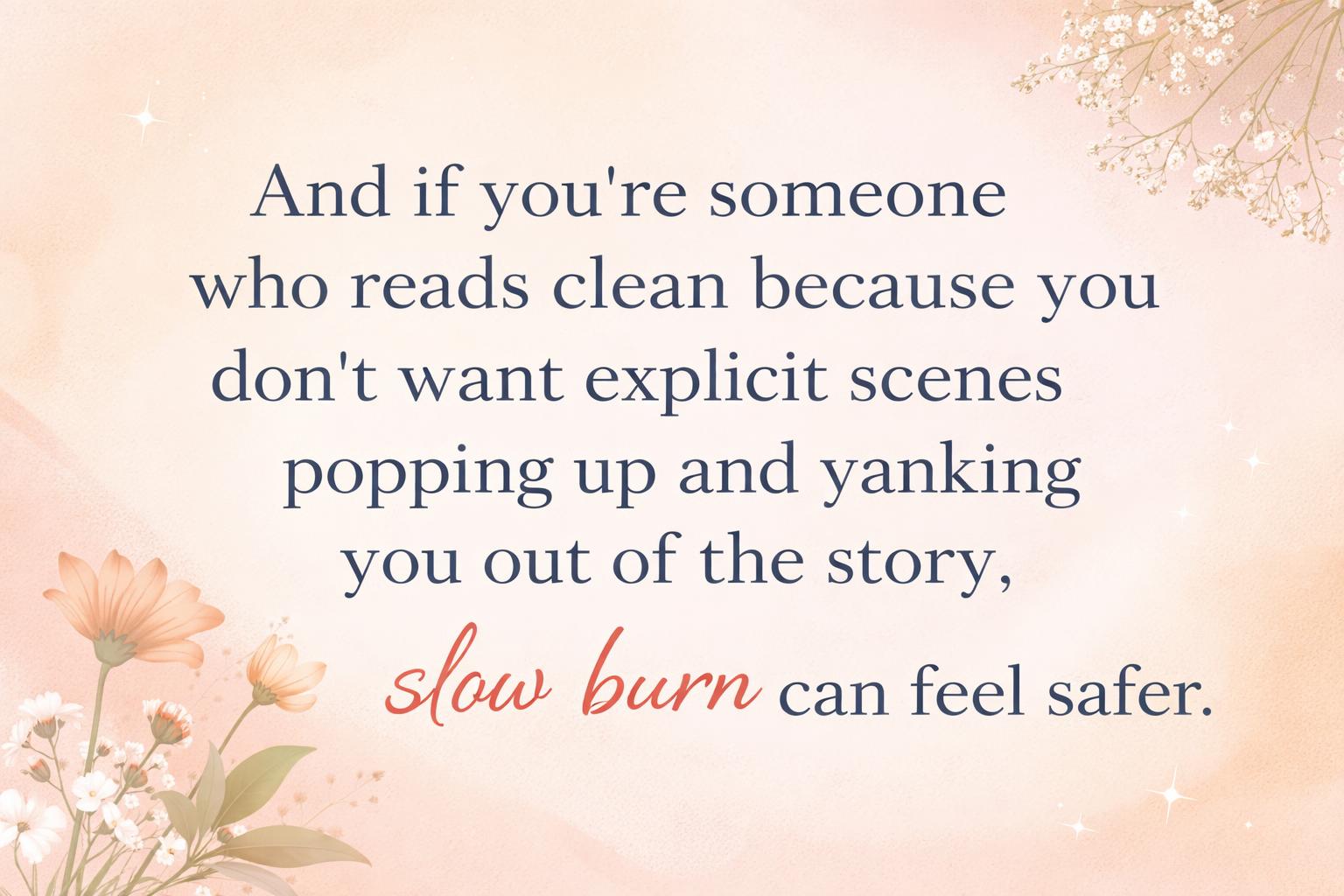
And if you’re someone who reads clean because you don’t want explicit scenes popping up and yanking you out of the story, slow burn can feel safer. You’re not bracing. You’re relaxing into the relationship arc.
The chemistry shows up in dialogue and decisions
Here’s the trick. The story has to give you proof that the connection is growing. Not just “they’re attracted.” I want to see them choose each other in small ways. Over and over. It’s that pattern that makes the eventual romance feel inevitable.
If you like tracking different clean romance vibes, I keep a bigger orientation page here: my main guide to clean romantic books, movies, and TV shows.
Common slow-burn setups that clean romance readers love
Thing is, slow burn isn’t one single trope. It’s a pacing style that can sit inside a bunch of setups. Some work better in clean romance than others, in my experience.
Friends to more than friends
This one’s classic for a reason. The affection is already there. The trust is already there. So the tension becomes: when do they admit it? And what happens if they risk the friendship and it goes sideways?
I’m a fan when the author lets the friendship feel real. Shared history. In-jokes. Showing up in small ways. Not just “they’ve known each other forever” tossed in like seasoning.
Forced proximity with real reasons to be careful
Roommates (cleanly handled). Working together. Small-town situations where everyone’s watching. Or they’re collaborating on something that matters. A fundraiser. A project. A family obligation. The closeness ramps up. But the characters have good reasons not to rush. That’s where clean romance shines, honestly.
- They’re healing from past heartbreak.
- They’ve got convictions about pacing and commitment.
- One of them has responsibilities that make dating complicated.
- They’re protecting a friendship or family relationship.
- The timing is genuinely messy.
But I’ll be straight with you. If the “reason to wait” is flimsy, I get annoyed. “I can’t date you because… plot.” No thanks. Give me something that holds weight.
If you want more trope-specific reading ideas, I’ve got a page that rounds up themes and variations here: best clean romance tropes and themes. It’s where I point people when they say, “Okay, but what kind of slow burn?”
How to tell a good slow burn from a frustrating one
Honestly? This is the part most people don’t talk about. Slow burn can be gorgeous. Or it can feel like you’re stuck in traffic behind someone driving 12 miles an hour.
Good slow burn has momentum
Even when the couple isn’t together yet, the relationship is moving. You can point to moments and say, “That changed something.” A boundary clarified. A misconception corrected. A sacrifice made. A secret shared. They’re not circling the same emotional drain for 200 pages.
When I’m choosing a book for myself, I usually peek at reviews for one specific clue: do readers mention emotional progression? Not just “it’s clean” or “it’s cute.” I want to hear that the characters actually grow.
Frustrating slow burn is repetitive
One exception. Some stories intentionally use repetition to show anxiety or trauma. That can work. But most of the time, repetitive slow burn looks like this: the same misunderstanding keeps resetting the relationship. Or the characters refuse to communicate for no believable reason.
And clean romance readers can be extra sensitive to this, I think, because we’re already on board with patience. We’re not asking for instant spice. So if the story still feels stalled? That’s not “slow burn.” That’s just… stuck.
My favorite ways to enjoy slow burn without getting antsy
So, what do I do when I’m craving slow burn but I don’t want to feel teased for 400 pages? I tweak how I pick and how I read.
I match the burn speed to my mood
If I’m tired, I want a faster emotional payoff. Still clean. Still tender. Just less waiting. If I’m in my “let it simmer” mood, then yes, give me the long arc. Give me the tension. Give me the meaningful glances.
I also pay attention to subgenres. A cozy small-town romance can carry a slow burn with charm. Romantic suspense can do it with stakes. Inspirational romance often ties it to personal growth and faith. Different flavors.
I look for micro-payoffs along the way
Real talk: the best slow burns feed you. They don’t starve you. You get tiny wins. A moment of comfort. A private joke. A protective gesture. A conversation that goes deeper than it “needs” to. Those moments keep me invested even when the official couple label is still far off.
And if a book gives me nothing until the last chapter? I might finish it. I might not. Life’s short. My TBR is not.
FAQs for What is slow burn in clean romance stories
Does slow burn always mean no kissing until the end?
Nope. Slow burn is more about the relationship pace than a single “kiss rule.” Some clean, slow burns have a late first kiss. Others have an earlier kiss that raises the stakes, then the deeper commitment takes longer. In my experience, what matters is whether the physical moments match the emotional readiness.
Is slow burn the same as friends to lovers?
Not exactly. Friends to lovers is a setup. Slow burn is pacing. You can have friends to lovers that moves pretty fast once the feelings click. And you can have a slow burn that starts with strangers, rivals, or coworkers. The overlap is common, though, because friendship naturally builds trust, and that makes the waiting feel meaningful.